Ayodhya Parikrama
Ayodhya Parikrama is the sacred practice of circumambulating the holy city of Ayodhya, the birthplace of Lord Shri Ram. For centuries, devotees have walked the parikrama paths to seek blessings, purify the soul, and connect with the divine leela of Maryada Purushottam Ram.
Parikrama in Ayodhya is not merely a physical journey but a spiritual pilgrimage encompassing temples, ghats, ashrams, and sacred sites mentioned in the Ramayan and Puranas. Each type of parikrama carries unique significance and is observed during specific occasions throughout the year.
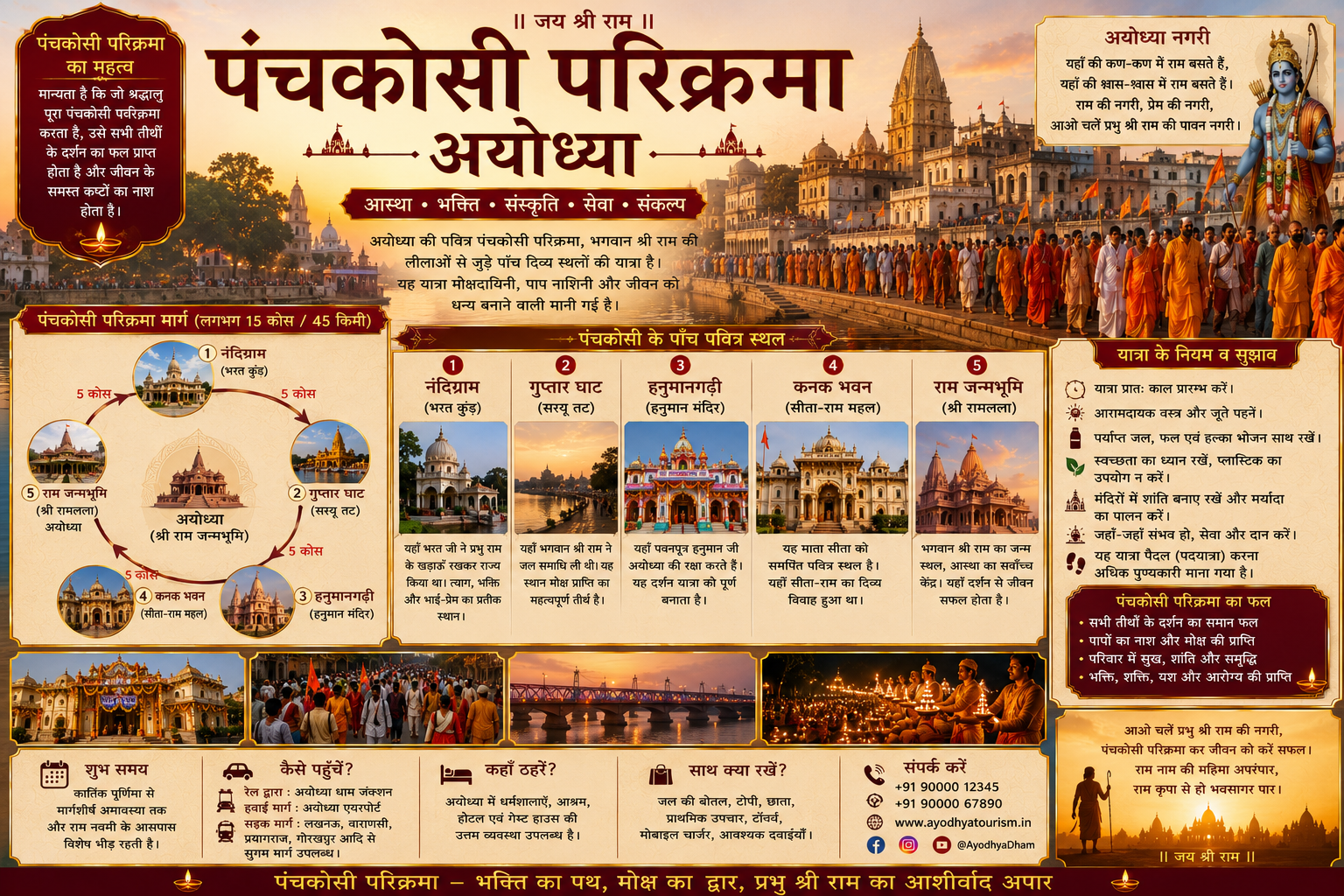
Panchakosi Parikrama
Importance & Significance
Panchakosi Parikrama is the most widely performed circumambulation of Ayodhya, covering a sacred radius of five kos (approximately 15 kilometers) around the city. According to scriptures, completing this parikrama equals the merit of performing Ashwamedha Yagna.
The path includes darshan at Ram Janmabhoomi, Hanuman Garhi, Kanak Bhawan, Nageshwarnath Temple, and sacred ghats along the Sarayu. Devotees traditionally complete the parikrama barefoot, chanting Ram naam and observing maun (silence) for enhanced spiritual benefit.
Key Sacred Sites
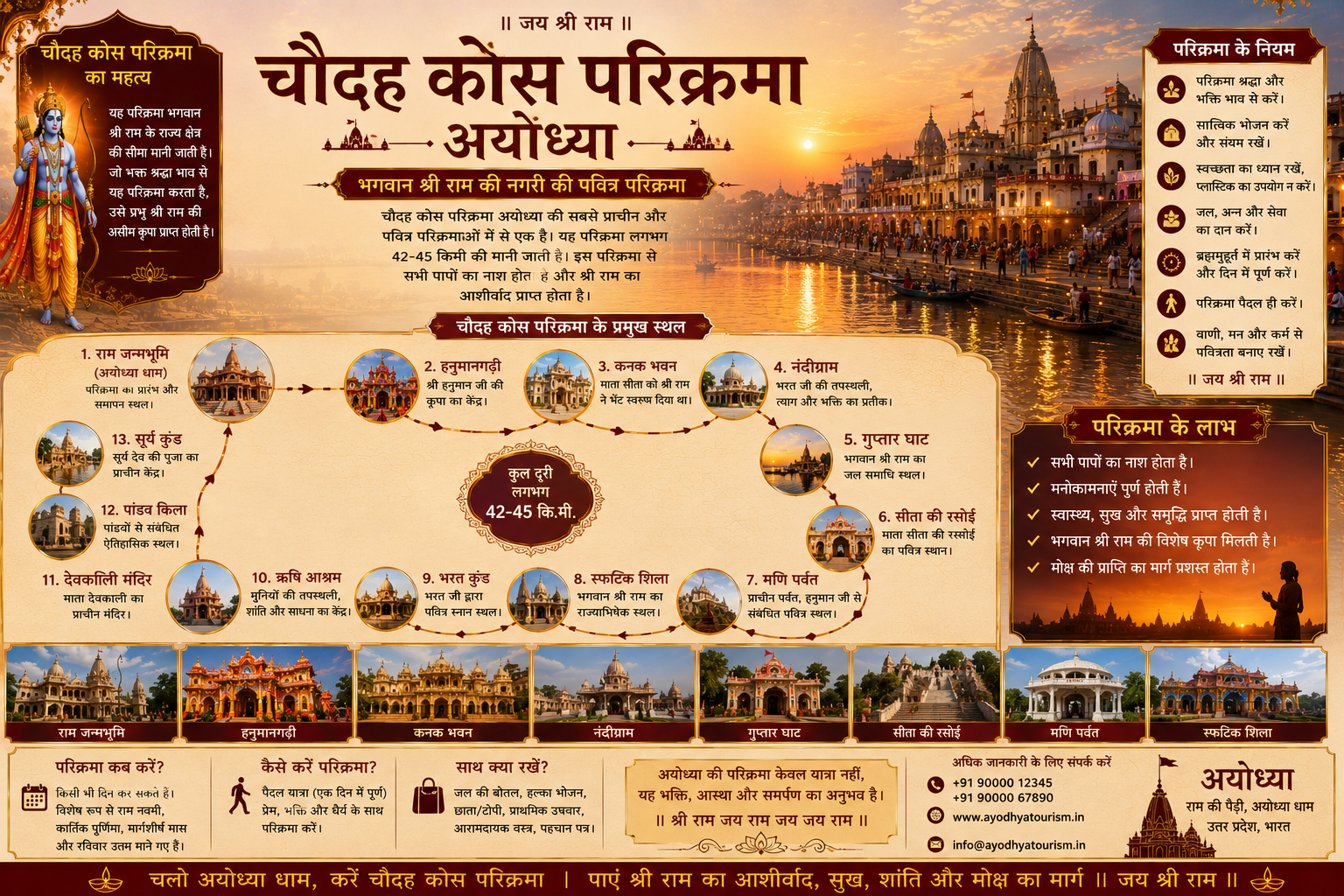
Chaudah Kos Parikrama
Importance & Significance
Chaudah Kos (14 Kos) Parikrama is the grandest and most extensive circumambulation of Ayodhya, covering approximately 45 kilometers. This ancient tradition is mentioned in the Puranas and is believed to have been established by sages and kings of the Ikshvaku dynasty.
Completing the Chaudah Kos Parikrama is considered highly meritorious and is undertaken by thousands of devotees during major festivals. The extended route encompasses not only the inner city temples but also sacred sites in the outer periphery of Ayodhya Kshetra.
Key Sacred Sites
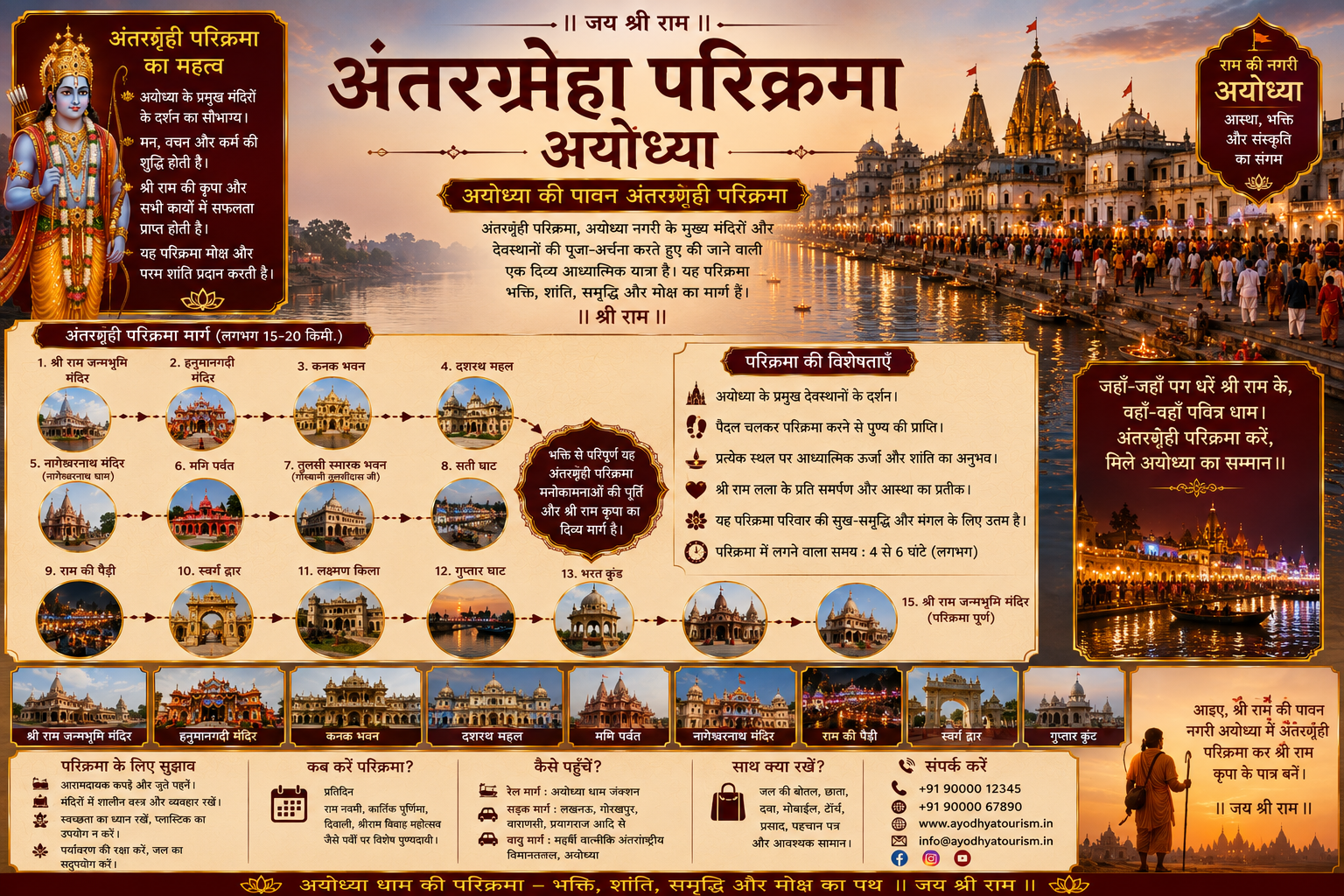
Antargrahi Parikrama
Importance & Significance
Antargrahi (inner) Parikrama covers the core temple circuit within the ancient city of Ayodhya. This is the most accessible parikrama for daily pilgrims, elderly devotees, and those with limited time. It typically takes 2-4 hours to complete.
The route connects all major temples including Ram Mandir, Hanuman Garhi, Kanak Bhawan, Dashrath Mahal, Treta Ke Thakur, Sita Ki Rasoi, and Janaki Ghat. Tradition holds that Hanuman Garhi darshan should be done before Ram Mandir during parikrama.
Key Sacred Sites
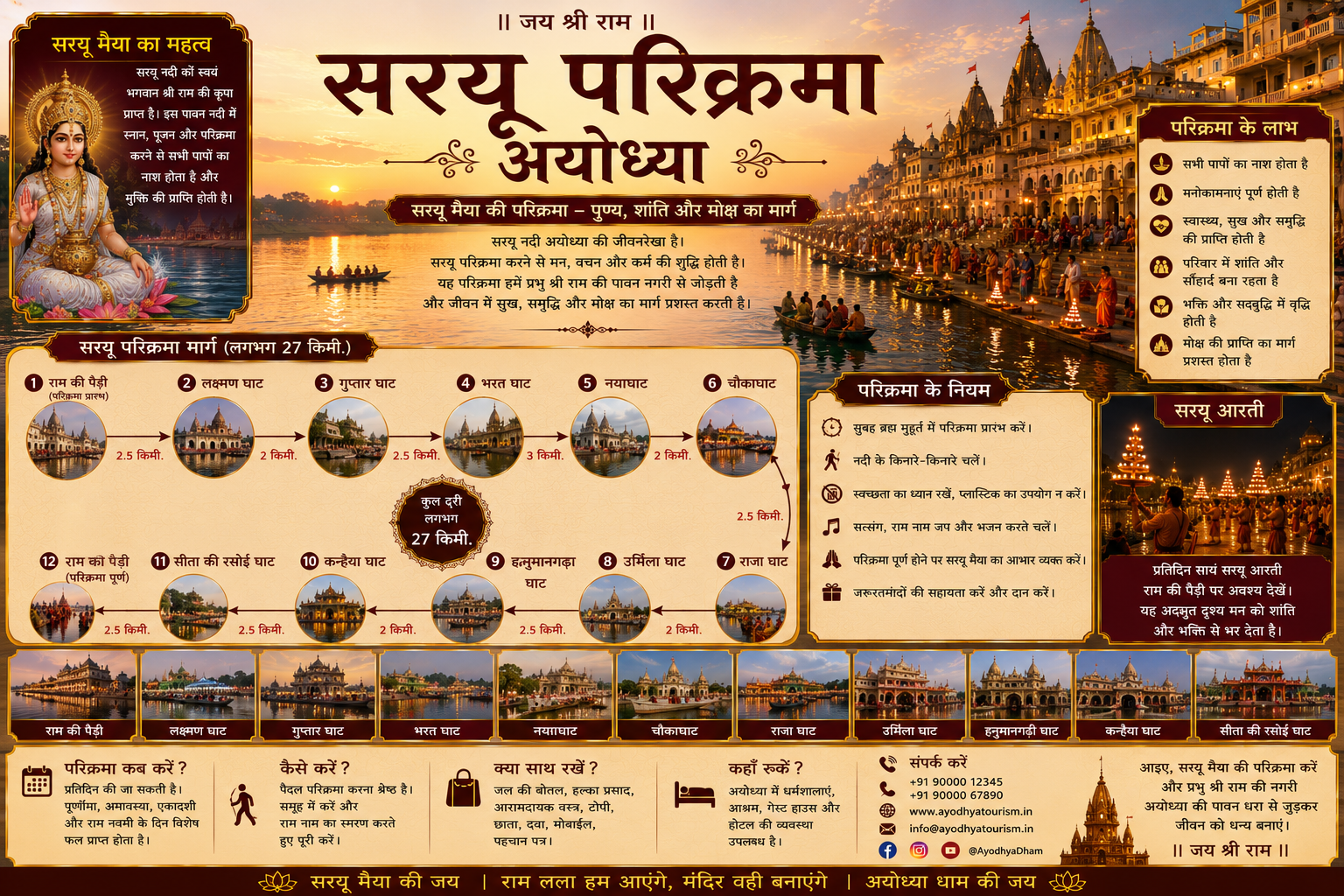
Sarayu Parikrama
Importance & Significance
Sarayu Parikrama is the sacred circumambulation along the holy Sarayu river, whose waters are believed to wash away sins. The river holds immense significance as Lord Ram took Jal Samadhi at Guptar Ghat before ascending to Vaikuntha.
Devotees walk barefoot along Ram Ki Paidi, Guptar Ghat, Janaki Ghat and other sacred ghats, often taking a holy dip before or after the parikrama. Evening Saryu Aarti at Ram Ki Paidi is an essential part of completing the Sarayu parikrama experience.
Key Sacred Sites
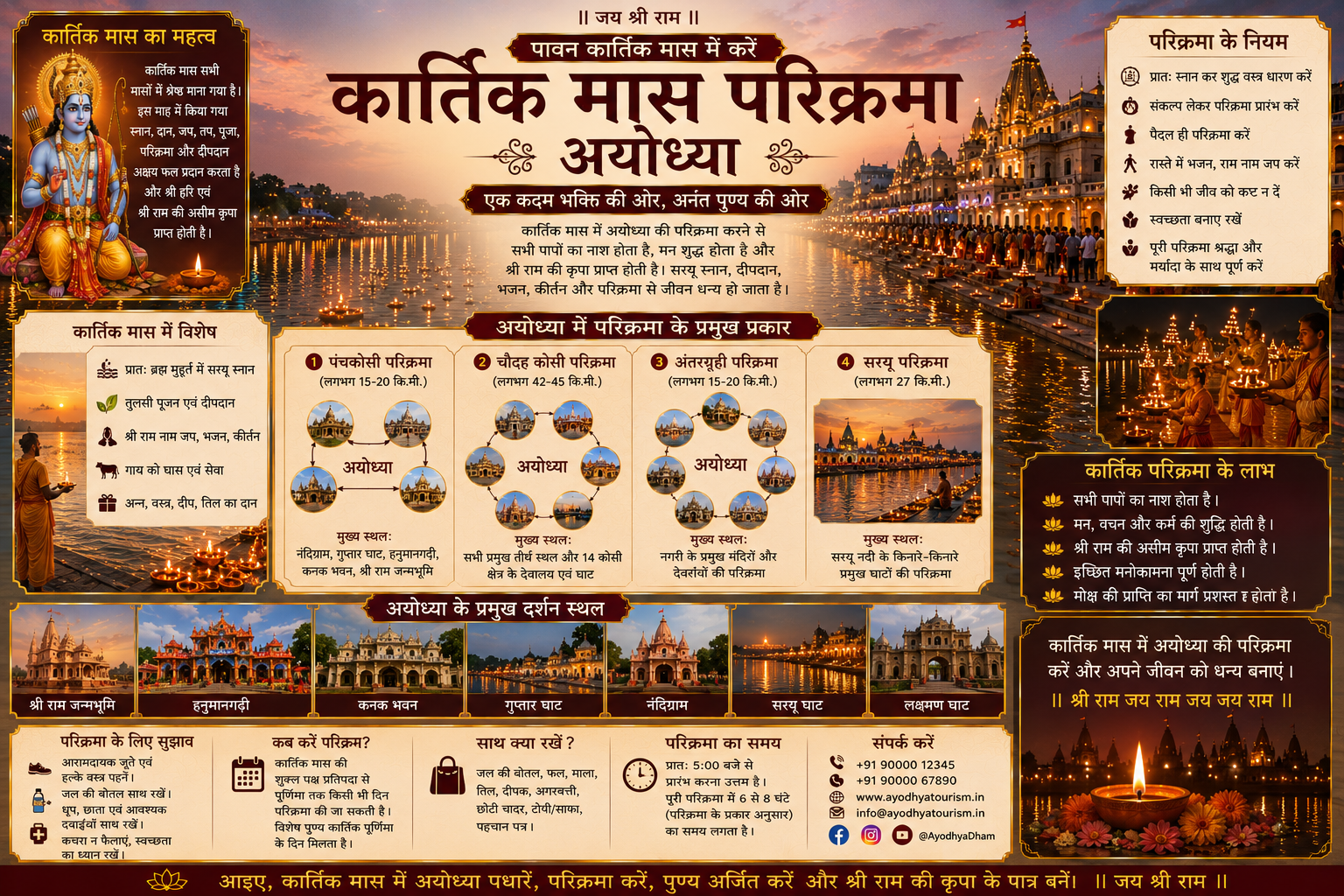
Kartik Month Parikrama
Importance & Significance
Kartik month is considered the holiest month for Ayodhya Parikrama. Scriptures state that parikrama performed during Kartik masa yields manifold spiritual merit. The entire month sees lakhs of devotees undertaking Panchakosi and Chaudah Kos parikramas.
Deepotsav during Kartik Amavasya transforms Ayodhya into a city of light, and parikrama during this period combined with diya lighting and Saryu Aarti creates an unparalleled devotional experience. Many devotees observe Kartik Vrat (fasting) while performing parikrama.
Key Sacred Sites
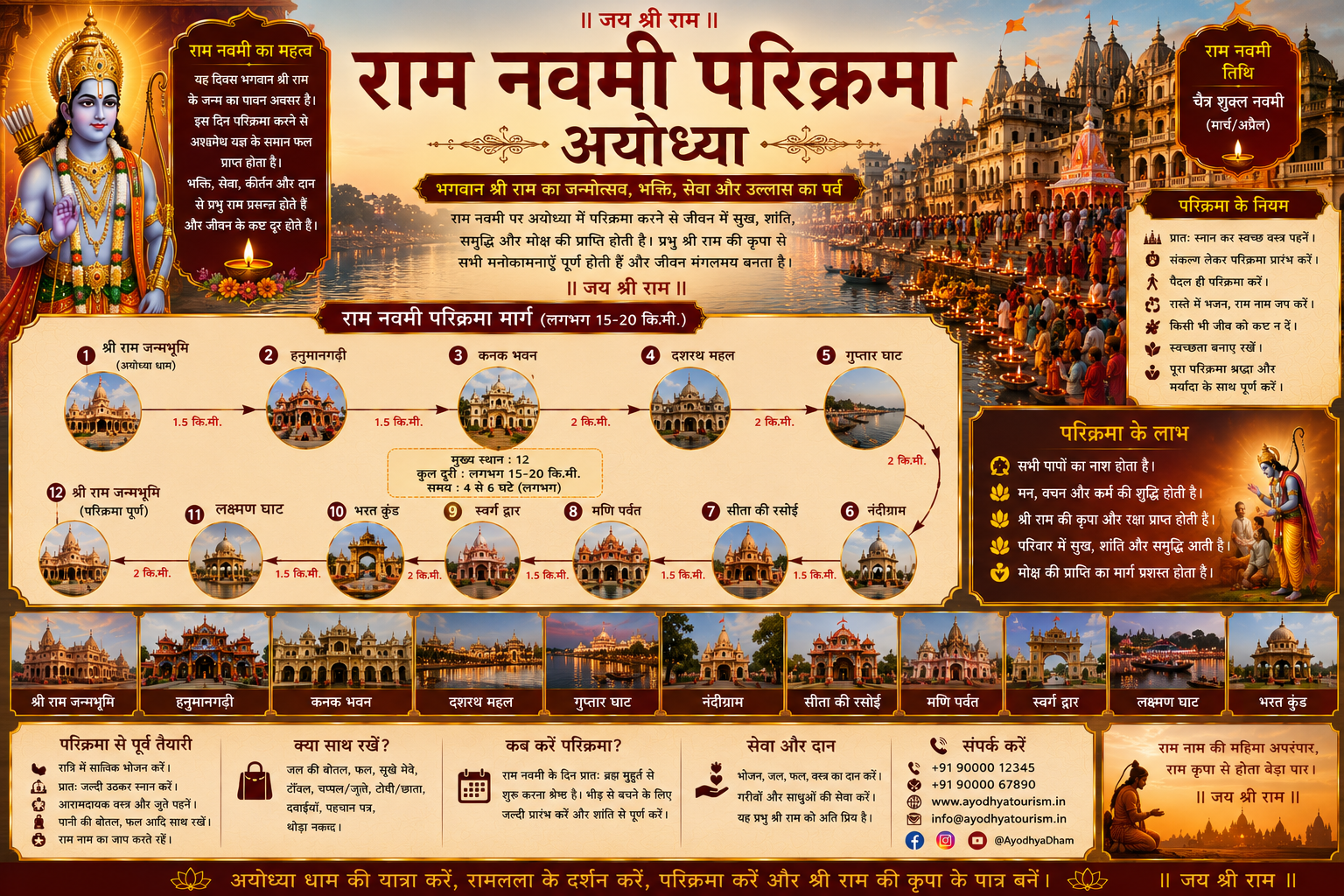
Ram Navami Parikrama
Importance & Significance
Ram Navami Parikrama is performed on the auspicious birthday of Lord Shri Ram. Devotees undertake special parikrama to celebrate the birth of Maryada Purushottam and seek blessings for righteousness, prosperity, and spiritual growth.
On Ram Navami, the parikrama route is adorned with flowers and decorations. Special abhishek and bhog are offered at Ram Mandir, and Shobha Yatras accompany parikrama processions through the city streets.
Key Sacred Sites
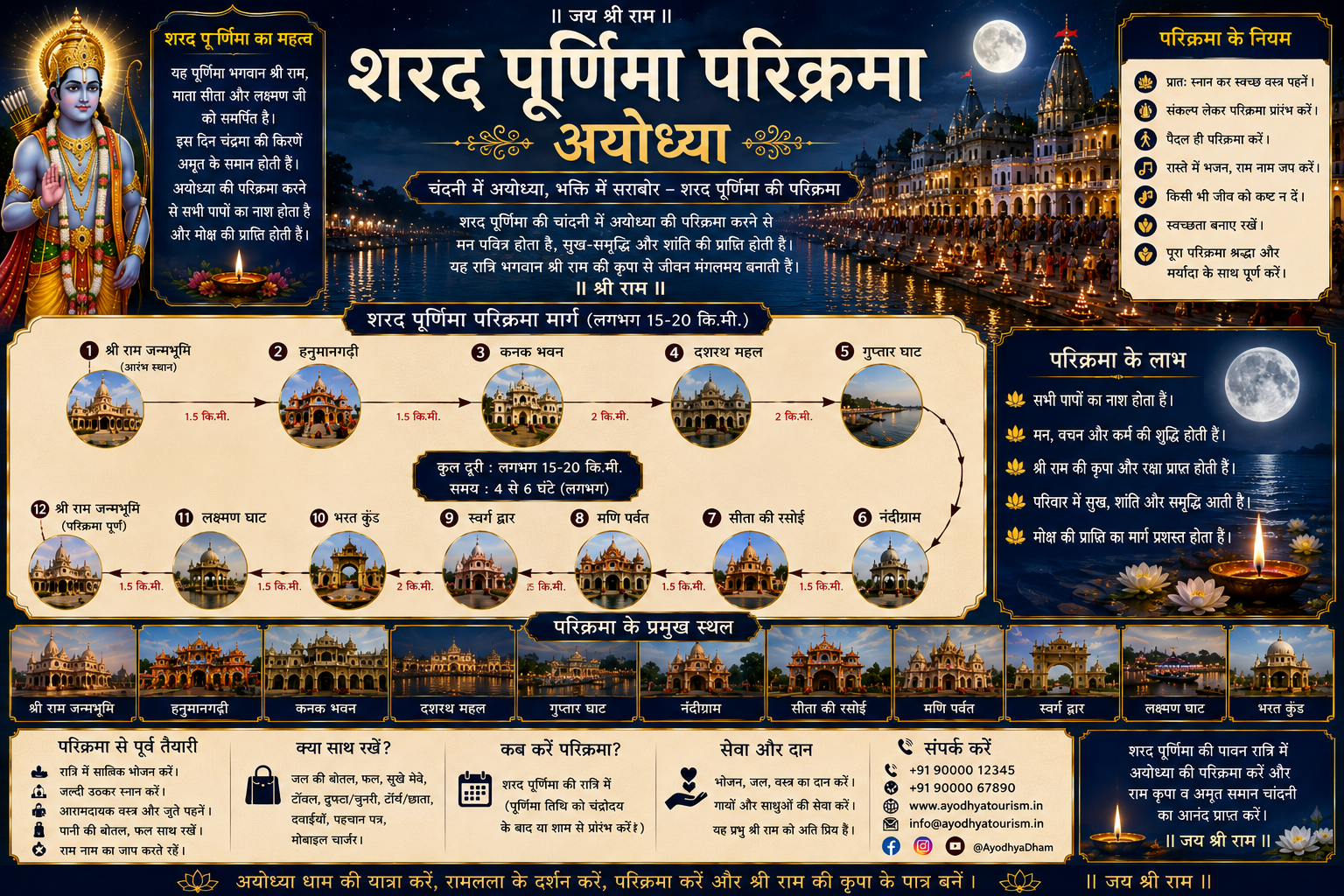
Sharad Purnima Parikrama
Importance & Significance
Sharad Purnima Parikrama is performed on the full moon night when the moon is believed to shower amrit (nectar) through its rays. In Ayodhya, this parikrama holds special significance as devotees walk under the moonlight along sacred routes.
Many devotees keep vigil through the night, performing parikrama and chanting Ram naam. The full moon night at Ram Ki Paidi with Saryu Aarti creates a mesmerizing spiritual atmosphere unique to Ayodhya.
Key Sacred Sites
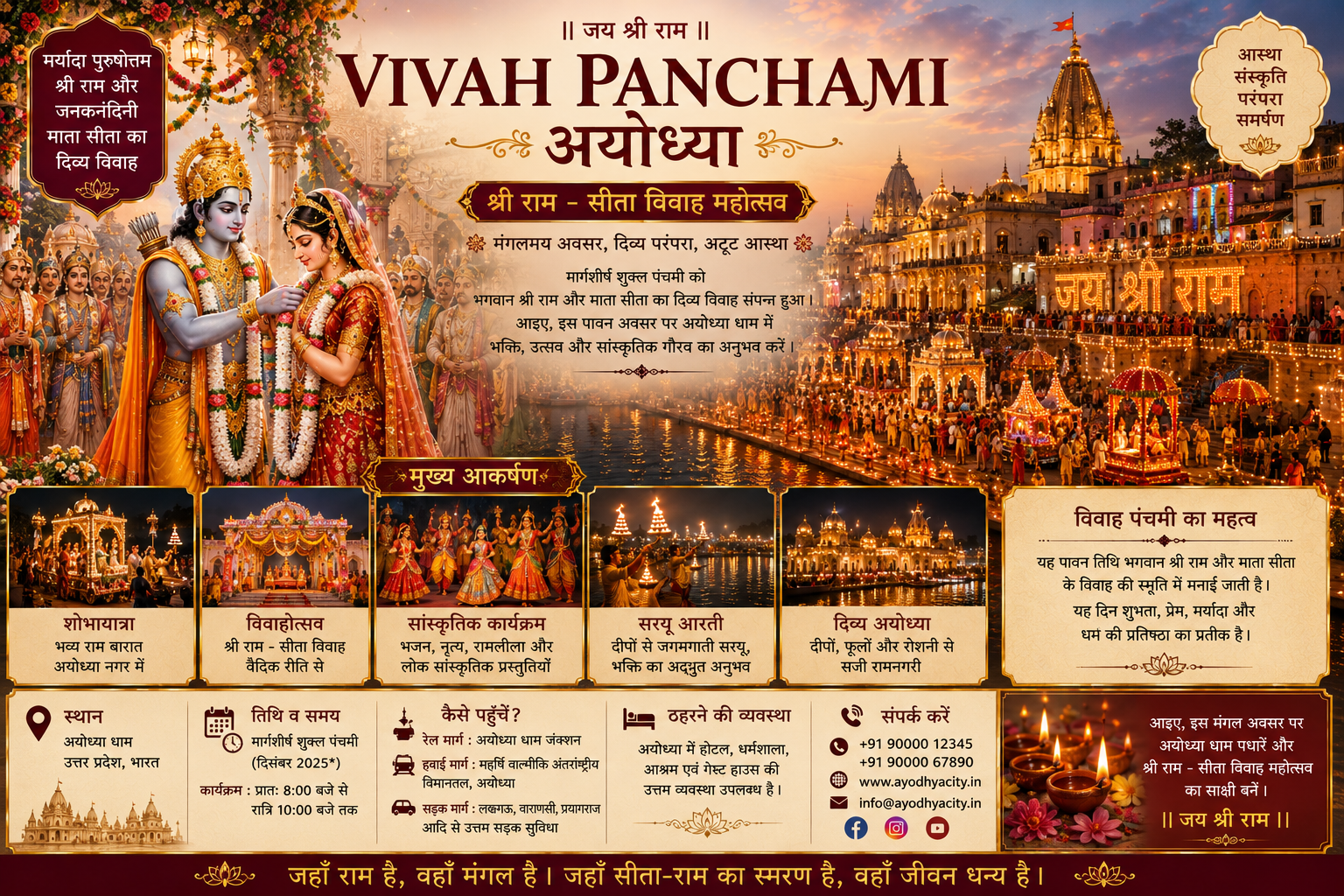
Vivah Panchami Parikrama
Importance & Significance
Vivah Panchami Parikrama commemorates the divine wedding procession of Lord Ram and Goddess Sita. The parikrama route connects temples associated with their marriage, especially Kanak Bhawan and Janaki Kunj Mandir.
Devotees, especially couples seeking marital harmony, perform this parikrama during Vivah Panchami. The route symbolizes the sacred union of Purush and Prakriti, and walking it is believed to bless marriages with happiness and devotion.
Key Sacred Sites
Major Festivals of Ayodhya
Celebrate the divine festivals of Ram Bhakti in the holy city of Ayodhya
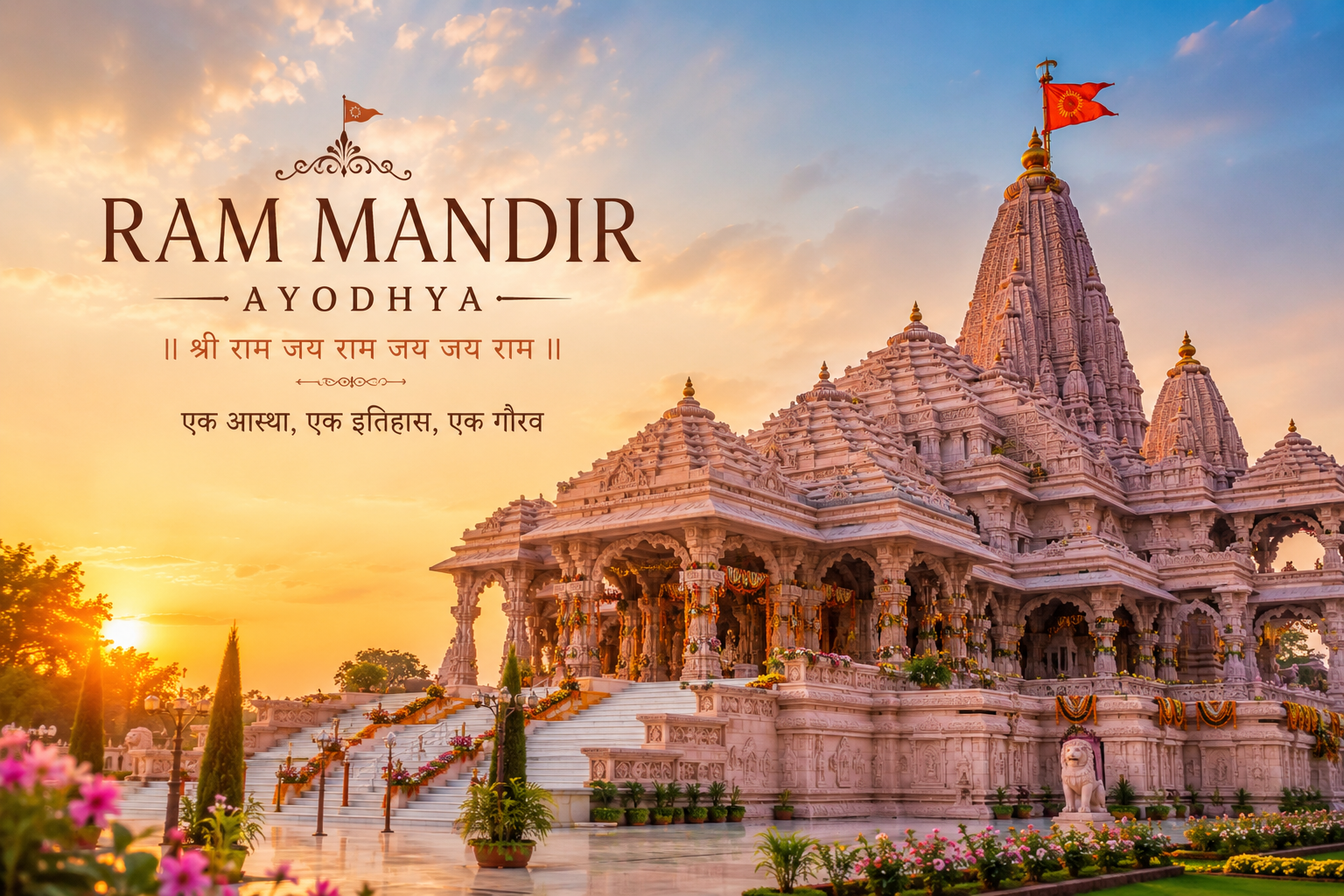
Ram Navami
Ram Navami marks the birth of Lord Ram and is celebrated with immense devotion across Ayodhya. The city comes alive with processions, bhajans, and spe...
Read More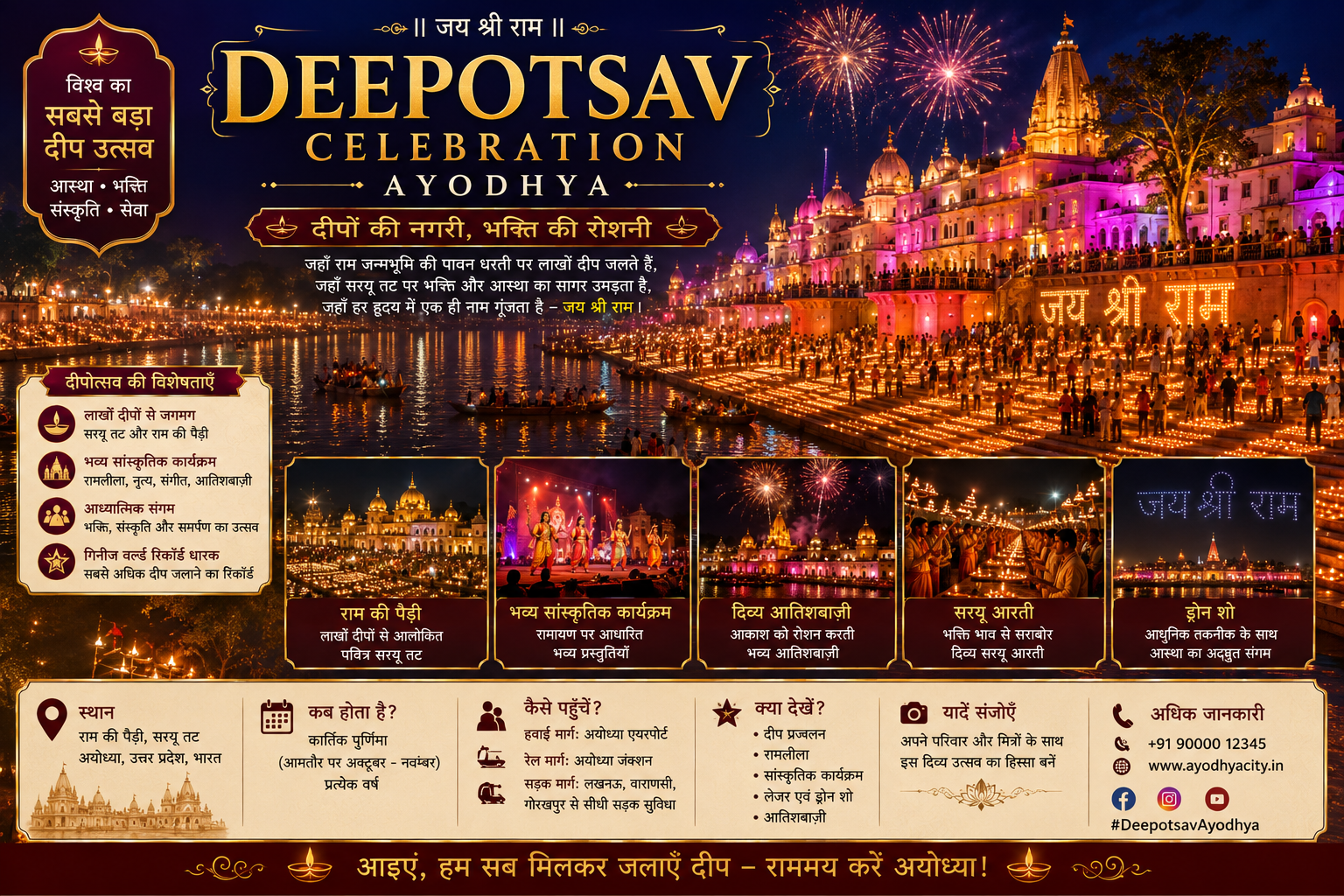
Deepotsav
Deepotsav is Ayodhya grandest festival where millions of earthen lamps illuminate the Sarayu riverbanks, recreating the joyous return of Lord Ram to A...
Read More
Vivah Panchami
Vivah Panchami commemorates the divine marriage of Lord Ram and Goddess Sita, celebrated with a grand reenactment at Janaki Kunj and across Ayodhya.
Read More
Diwali in Ayodhya
Diwali in Ayodhya holds special significance as the festival commemorates Lord Ram return to Ayodhya after 14 years of exile. The city celebrates with...
Read More